Foundation raising in Covina CA - a house resting on soil that can hold it
Doors sticking, cracks spreading or a floor that slopes? We find why the house is settling, then set piers to bring it back near level.
- Fully licensed and insured.
- Free in-person estimates.
- We respond within 1 business day.
Can a settling house in Covina be raised back to level?
The short answer: Foundation raising in Covina, CA means setting piers under your existing foundation that carry the house past the weak upper soil and down to deeper soil that can hold it, so the house can be held where it is or lifted back near its original level.
Most people call us after a crack in the drywall keeps getting longer or a door that used to close fine starts to stick. The price usually turns on how many piers the house needs, which kind, how hard the footing is to reach and how much drainage work has to happen first, and the schedule turns on whether an engineer should look first and how long the permit review runs. I'll give you a written estimate that lists what's included, so you know what you're paying for before anything gets scheduled.
How do you know your foundation is settling?
Cracks that keep growing
A crack in a wall or slab that's longer or wider than it was last season usually means the house is still moving, not that an old crack has settled in. Waiting lets it open further, and every bit of movement adds to the patching and drywall work at the end.
Doors and windows sticking
When doors start rubbing the frame or windows won't close all the way, one corner of the house has usually dropped and pulled the openings out of square. The longer that corner keeps sinking, the more trim, frames and glass get pushed out of line.
Floors that slope
A ball that rolls to one side or a gap opening under the baseboard tells you one part of the house sits lower than the rest. It's the sign people live with longest, and the low side usually keeps going down while they wait.
Stair-step cracks in brick
Cracks that zigzag along the mortar of a brick wall, or a chimney pulling away from the house, mean a heavy part of the house is moving. Brick doesn't flex, so once it starts cracking the movement tends to show up in other places fast.
How we handle foundation raising
Before we talk about lifting anything, I want to know why the house is settling, because a lift that skips the cause won't hold. Usually it's water, from a downspout dumping at the wall, a yard that drains toward the house or a leaking line, softening the soil until a gap opens under the footing, and that gets fixed first. If the cracks are growing or the quotes you've gotten are all over the place, I'll tell you to get a structural engineer out before you hire anyone, us included. Once the cause is handled, we dig down beside the footing at each pier spot, set the piers until they bear on deeper soil, lift the house or hold it where it sits, then backfill the holes and clean up.
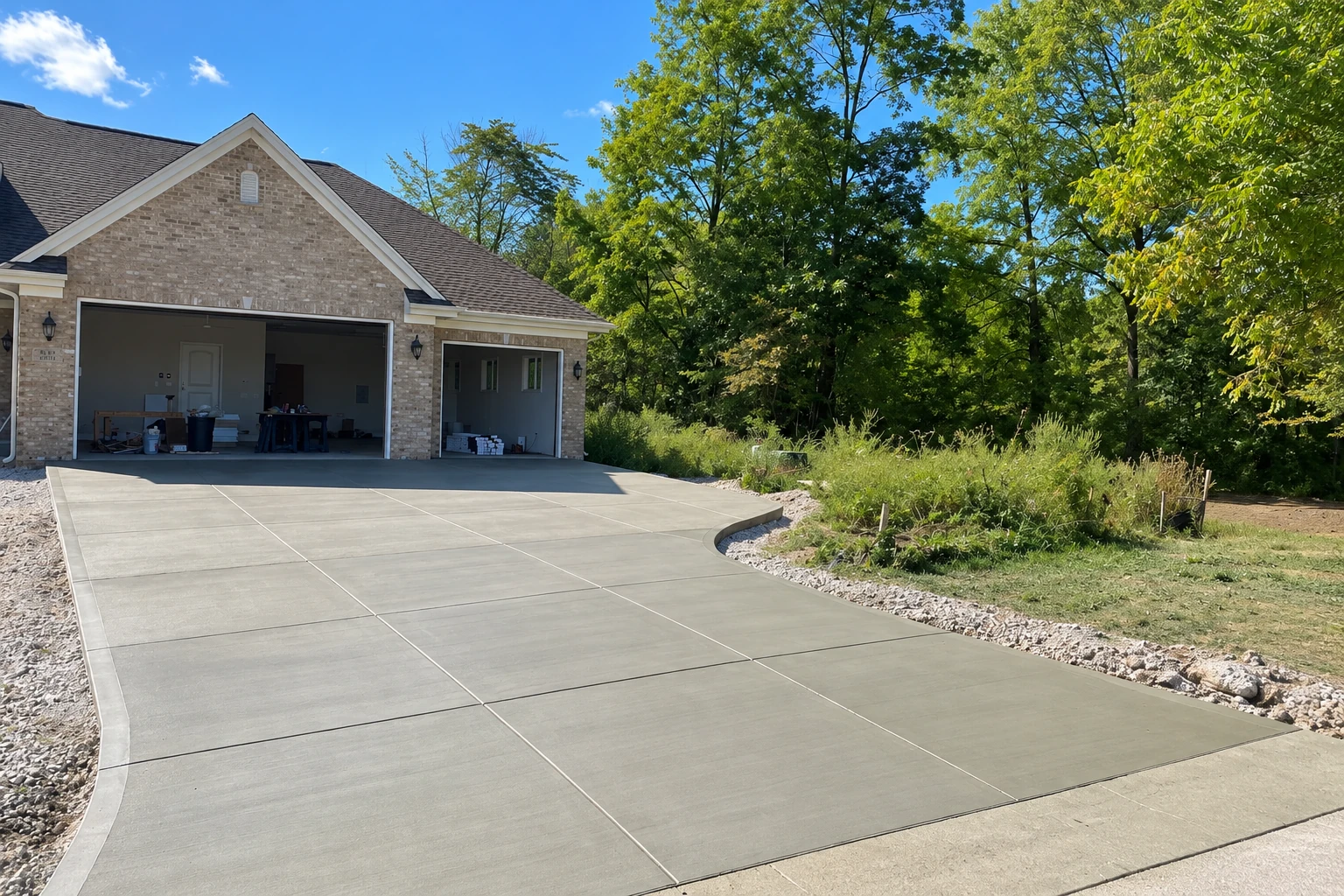
Foundations often sit under or right against other concrete. When a pier spot lands under a patio, walk or garage floor, we use concrete cutting to open just that section instead of breaking out the whole slab. When a driveway sank and cracked along with the house, we'll often suggest replacing it through our concrete driveway building work, on a base we dig out and pack, since the old one rarely comes back level.
Push piers for heavy houses
Push piers are steel sections driven down by hydraulic rams until they hit refusal, the point where they won't go any deeper, or bedrock. They suit heavier houses with brick or block walls, because the rams push against that weight to drive them.
Helical piers for lighter loads
Helical piers have plates on the shaft and screw into the ground like a big auger, so they don't need a heavy house on top to set them. They suit lighter houses and tight spots with little room to work, like a narrow side yard.
Holding the house where it sits
Not every house needs to come up, since piers can also just stop further settling. That suits a house that's dropped a little and evenly, where the goal is to keep it from going further rather than chase the last bit of level.
What happens after you call us about your foundation?
Here's how a foundation raising job runs with us in Covina, from the first call to the walk-through at the end, including the city review that usually sets the start date.
- Step 01
Call and describe what you see
Call (626) 412-8840 or send the form, and we'll talk through the cracks, doors and floors you've noticed. Have your address, a few crack photos and any engineer report handy, because they tell us right away whether to start with a visit or an engineer.
- Step 02
I come out and measure
I walk the house and yard, look at where the water goes and measure the areas that are moving. You get a written estimate that lists what's included, so you can line it up against other bids.
- Step 03
We handle the permit first
If the job needs a permit, we take care of it before anything gets scheduled. In Covina a first plan check submittal, the city's review of the job's drawings, can take 4 to 6 weeks to complete, so we set your start date around that review.
- Step 04
Lift, then walk it together
Our crew sets the piers and does the lift with me on site for the pour, and we keep noisy work out of the hours the city doesn't allow it, 8 p.m. to 7 a.m. and any Sunday or public holiday. When the work is done, we walk the job with you before we call it finished.
Foundation raising permits and conditions in Covina
Covina issues express permits for a short list of jobs, like re-roofs and window and door changeouts, and foundation raising isn't on it, so if your job needs a permit, expect it to go through plan check. The city's Building and Safety department is the place to ask about your house, and the city wants a site plan for every project no matter how small. When a permit is needed, we pull it as the licensed contractor and set up the inspections, but first we check whether your address falls under the city or under LA County, because that decides which office we work with.
A lot of the houses we see around here are older one-story homes with narrow side yards, a driveway tight to one wall and patios poured right up to the foundation, so access often decides the pier type and how much concrete has to be opened up. We run into the same layouts on jobs in West Covina and Glendora.
Get a written estimate for raising your foundation
We get back to you within one business day to talk through the job, then I come out to look and measure for free. The estimate is in writing, lists what's included and comes with no obligation.
Why Covina homeowners call Covina Concrete
The owner writes your estimate
I come out to look at the job and write the estimate myself, and a crew I've worked with for years does the forming, pouring and finishing while I'm on site for the pour. You deal with the person who priced the job, so nothing gets lost between the estimate and the work.
Licensed and insured, easy to check
We're fully licensed and insured, and you can look up any contractor's active license and its type on the Contractor State License Board site. The board lists pile driving and pressure foundation jacking as its own license type, covering pile driving and injecting concrete or mortar into foundations to stabilize them, so it's worth checking what anyone you hire holds.
Concrete full time since 2013
I came over from landscape installation and switched to concrete full time in 2013, so we've been at it 13 years. I care most about what's out of sight once the work is done, and on this kind of job that's the footing, the piers and the backfill.
We check city or county first
Covina's permit technicians check a contractor's license before they'll issue any permit, and some Covina addresses actually fall under the county. We sort out which office your address belongs to at the start, so the permit goes to the right counter the first time.
On a settling house, the part that matters most is knowing why it moved before anyone lifts it. Contact us to set up a visit, and have your photos ready.
Foundation raising questions from Covina homeowners
How much does foundation raising cost in Covina?
Foundation repair across the US usually costs about $2,300 to $8,100 per job, and that's the general market, not our price. Where a job lands depends on location, the size of the house, the materials and how bad the damage is. Your written estimate shows what's included for your house.
Should I call a structural engineer before a foundation contractor?
Yes, one engineering guide advises having a structural engineer look first when cracks are widening, floors slope noticeably or contractor quotes differ widely. The same guide says to do it when the repair quote is expensive and when you're buying a house that shows signs of settling. An engineer's report also gives every contractor the same plan to price.
How do I compare foundation raising quotes?
Compare how each bid deals with why the house is settling, not just how many piers it lists. Settling tends to come back while water keeps opening a gap under the footing, so a quote that skips the drainage or soil problem isn't really the same job. Ask each contractor what they think the cause is and what's in the price to fix it.
Which type of foundation pier is best for my house?
Push piers usually suit heavier brick or block houses, and helical piers usually suit lighter houses and tight spots. The house and the yard decide it, which is why we pick after seeing both, not over the phone.
Is my Covina home under city or county building rules?
If your house has a Covina address but its street number is over 2999 or it sits south of the 10 freeway, it's actually in LA County, not the city. That changes which office reviews a foundation job, so we check it before anything else. We're based in Covina and work in the cities around it across the San Gabriel Valley, so if you're not sure we cover your area, call and ask.
How do I find out if my house is in an earthquake zone in California?
Type your address into the state's EQ Zapp map and it shows whether your home lies in a mapped earthquake hazard zone. It takes a minute, and it's useful to have on hand when you talk to us or an engineer about the house.
Related services that often come up with foundation work
Concrete cutting
Saw cutting opens a tidy square over each pier spot, so a patio or garage floor gets patched where we cut instead of torn out.
Concrete driveway building
A driveway that sank and cracked alongside the house usually won't come back level, so a new one on a dug-out, packed base is often the cleaner fix.
Send us your address and crack photos
Cracks are easiest to read before anyone patches or paints over them, so call (626) 412-8840 or use the form while they're still showing.