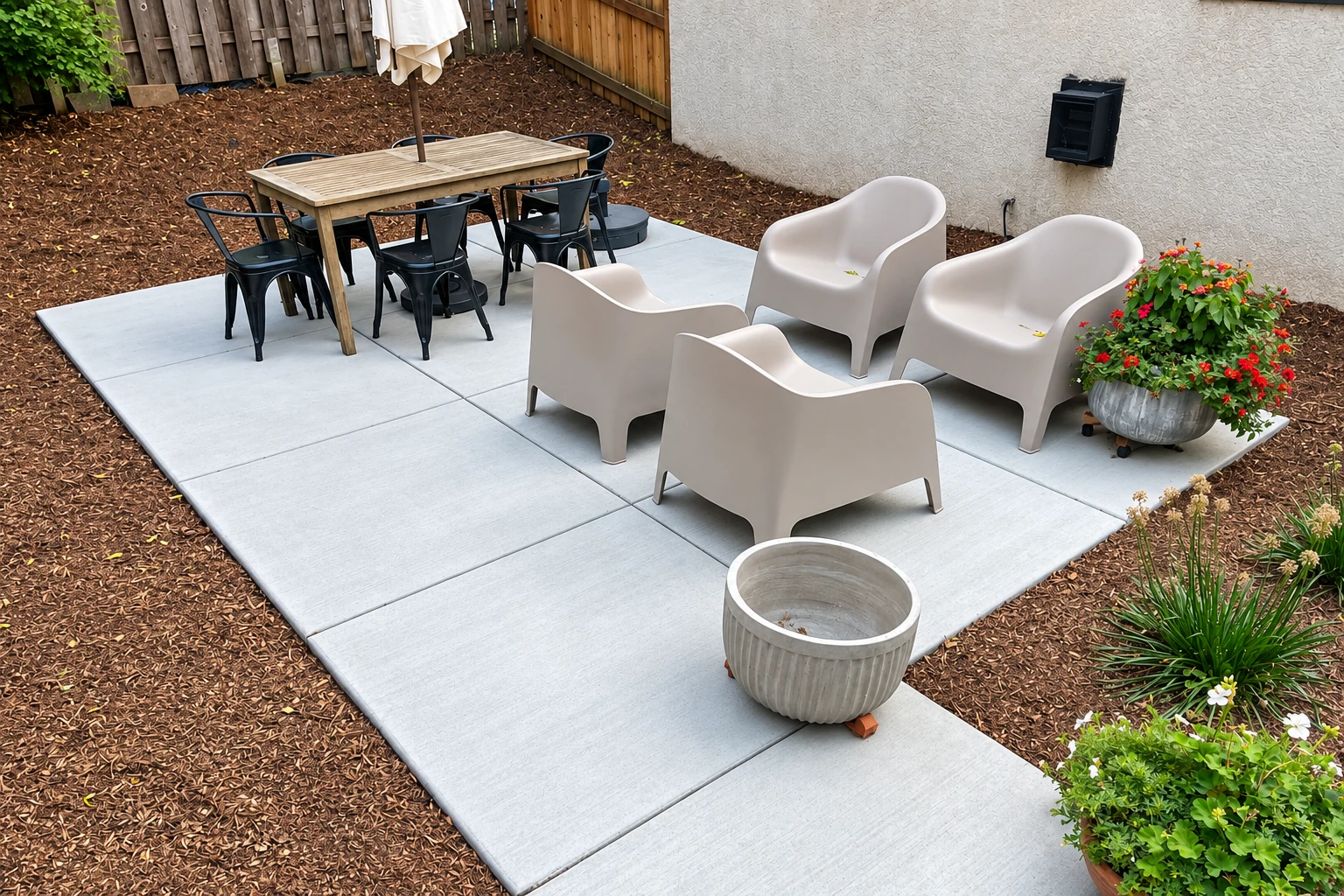
Concrete floor installation in Covina CA - a flat slab ready for your flooring
Cracked, uneven or dusty floor, or a space that needs a new one? We pour a flat, jointed slab ready for whatever goes on top.
- Fully licensed and insured.
- Free in-person estimates.
- We respond within 1 business day.
What does a new concrete floor in Covina involve?
The short answer: Concrete floor installation in Covina is forming, pouring and finishing a new slab for a room, garage, shop or addition. The result is a floor that's flat and ready to use as it is, or ready for tile, wood or a coating on top. Plan on the space staying out of use for a while after the pour, because the slab has to cure before it carries full weight or takes a covering.
Most people who call me about a floor have a slab that's cracked, dropped or gone dusty, or a space with no real floor yet, like a garage conversion or a new back room. Size moves the price most. Breaking out and hauling off an old slab adds to it, and so does any digging and base work the ground needs, steel in the floor, or prep for flooring on top. The schedule turns on whether a permit is needed and on the cure time before the floor gets loaded. Once I've measured, the written estimate gives you the figure for your own floor.
How do you know your concrete floor needs replacing?
Cracks that keep spreading
A hairline crack is normal in concrete. Cracks that widen, run across the room or leave one side higher than the other usually mean the base under the slab has moved, and the longer it moves, the more of the floor ends up coming out.
Flooring that lifts or smells damp
Tile that pops loose, wood that cups or a musty smell under carpet often points to moisture coming up through the slab. If you cover it again without fixing the cause, you usually end up paying for the flooring twice.
A dusty, flaking surface
A top that powders when you sweep or flakes off in patches usually comes from how the slab was finished or cured. It won't hold a coating or adhesive well, and traffic keeps making it worse.
How we handle concrete floor installation
We start under the slab, because that's the part you'll never see again. If there's an old floor, it comes out first. Then we dig down to firm ground and pack the subgrade, the soil the slab sits on, so it doesn't settle later. We set the forms to the height the floor has to meet and check which way any water would run. If flooring is going on top, I go over with you where the vapor barrier sits and whether the slab should be moisture tested before the flooring goes down. Rebar goes in where the floor needs it. That's the steel that holds the slab together if it does crack. We pour early in the day and finish the surface to suit what goes on it. We also cut control joints, shallow grooves that give cracks a planned place to go. Then comes curing, the slow wait that lets the concrete get strong, and you get a plain idea of when you can walk on the floor and when you can load it up. If the budget's tight, I'd cut back on the finish, not the base. A nice finish on a bad base doesn't last, and I'd rather tell you that before the pour than explain it after.
A new floor often meets other concrete at the door. If the room steps down to a yard, we can build concrete steps to match the new floor height so there's no odd lip to trip on. If the space sits next to a pool, we also pour concrete pool decks that tie in at the same level.
Slab for tile, wood or carpet
This suits rooms and additions getting a covering. The surface only has to be flat, so the care goes into the vapor barrier and the moisture question.
Bare concrete as the finished floor
This suits shops, laundry rooms and spaces where you want an easy surface to sweep, with a smooth troweled finish and often a sealer. It takes more finishing work, because the top is what you'll be looking at every day.
Slab with steel for heavy loads
This suits a garage or workshop holding a car, tool chests or loaded shelving, because rebar spreads the weight and holds cracks tight. It costs a little more, and on a floor that works hard it's worth it.
What happens after you call about a new floor?
Here's how a floor job runs with us, from your first call to the final walk-through, and what you'll have in hand at each step before anything gets poured.
- Step 01
Call and talk through the job
Call (626) 412-8840 or send the form, and we talk through the space, its size and what's going on top of the floor. Then we set a time for me to come out.
- Step 02
I measure and write it up
I look at the space, measure it and check the old slab and the ground under it. You get a written estimate that lists what's included, from the base work to the joints, so you know what you're paying for.
- Step 03
Permit first, then pour day
If the job needs a permit, we take care of it before anything gets scheduled. The city bars construction work that disturbs neighbors between 8:00 p.m. and 7:00 a.m. and any time on Sundays and public holidays, so we plan a morning start inside those hours, and I'm on site for the pour.
- Step 04
Walk the finished floor together
Once the floor is finished, we walk it with you before we call the job done. We go over when it's ready for feet, furniture and flooring so nothing gets rushed.
Concrete floor installation in Covina: permits and what we see
I won't guess on whether a new floor needs a permit. For addresses inside the city, the Covina Building & Safety Division takes permit applications. Its express permit list covers work like like-for-like re-roofs and window changeouts, not concrete floors, so that list doesn't settle the question for your job. If the floor is part of a project that adds square feet or builds a new structure or shed, the city requires planning approval before any permit. When a permit is needed, we pull it as the licensed contractor and set up the inspections.
Most of our floor calls around here are garage conversions, back-room additions and old shop or laundry slabs that cracked or dropped, and the trouble usually started in the base. We see the same kinds of houses on jobs in West Covina and Glendora. We're based in Covina and work the cities around it across the San Gabriel Valley and nearby, so call and ask if you're not sure we cover your area.
Get a written estimate for your new concrete floor
We get back to you within one business day to talk through the job and set a time for me to come out. The estimate is free and done on site, and you're under no obligation to go ahead.
Why Covina homeowners call Covina Concrete
I write every estimate myself
I come out, look at the space and measure it myself, and a crew I've worked with for years does the forming, pouring and finishing while I'm on site for the pour. You deal with the person who answers for the work from start to finish.
Pouring concrete full time since 2013
I ran a landscape installation business first and learned concrete from the finishers I kept hiring, then switched over full time in 2013. After 13 years, I know which shortcuts show up later, and most of them are under the slab.
Licensed in California and insured
We're fully licensed and insured. California requires a license even on work under $1,000 when the job needs a permit of any kind or the person doing it hires workers, so ask anyone bidding your floor for theirs.
On a floor, the base and the plan for moisture matter more than anything you'll see on day one. Call (626) 412-8840 or request an estimate, and I'll come take a look.
Concrete floor questions from Covina homeowners
How much does a new concrete floor cost near Covina, CA?
A concrete slab installed in the Los Angeles area usually costs about $8 to $17 per square foot. That's the going rate across the market, not our price. Reinforced slabs run a little higher per square foot than plain pads, and breaking out an old floor or fixing a bad base adds to the cost. Your written estimate gives you the figure for your own floor.
What causes cracks in a new concrete floor, and will mine crack?
Some cracking in concrete can't be prevented entirely, but well-designed joints control where it happens and keep it small. That's why we plan where the control joints go before the pour. Ask any contractor you're considering where theirs will sit.
How long does a new concrete floor take before I can walk on it?
A new slab should be walkable within about 48 hours, and it's safer to wait a week before heavier loads like furniture, shelving or a car. Plan any move-in or storage around those two waits.
How long does concrete take to cure before flooring goes down?
Full curing takes about a month, roughly 28 to 30 days. Trade guidance says curing should start as soon as finishing is done and continue for at least 3 days, which is why we don't let a fresh floor dry out fast. Check timing with your flooring installer before you book them.
How do I find out which office handles my permit if my address says Covina?
The city's building division handles addresses inside the City of Covina, but not West Covina and not county addresses that carry a Covina name. A Covina mailing address doesn't always mean you're in the city, so we check whether your address falls under the city or the county first, because that decides which office we work with.
What is the best way to keep slab moisture from ruining new flooring?
Floor guidance says coverings and coatings get the most protection when the vapor barrier sits directly against the slab. Flooring and concrete pros also measure the moisture in a slab with relative humidity testing, so ask whether yours will be tested before the covering goes down.
Related concrete work around a new floor
Concrete steps construction
When a new floor changes the height at a doorway, steps poured to match keep each rise even and safe for everyone going in and out.
Concrete pool decks
If the room opens toward a pool, the deck outside needs a surface that drains away from the house and stays safe to walk on barefoot when wet.
Get your new concrete floor measured
Have the square footage, the flooring you plan to put down and the property address handy when you call (626) 412-8840 or send the form, and the first call covers more ground.